[ PORTRAIT ]
Chef // France
_
Meeting with Manon Fleury
“A great wine can elevate a dish and transport it to another place!”
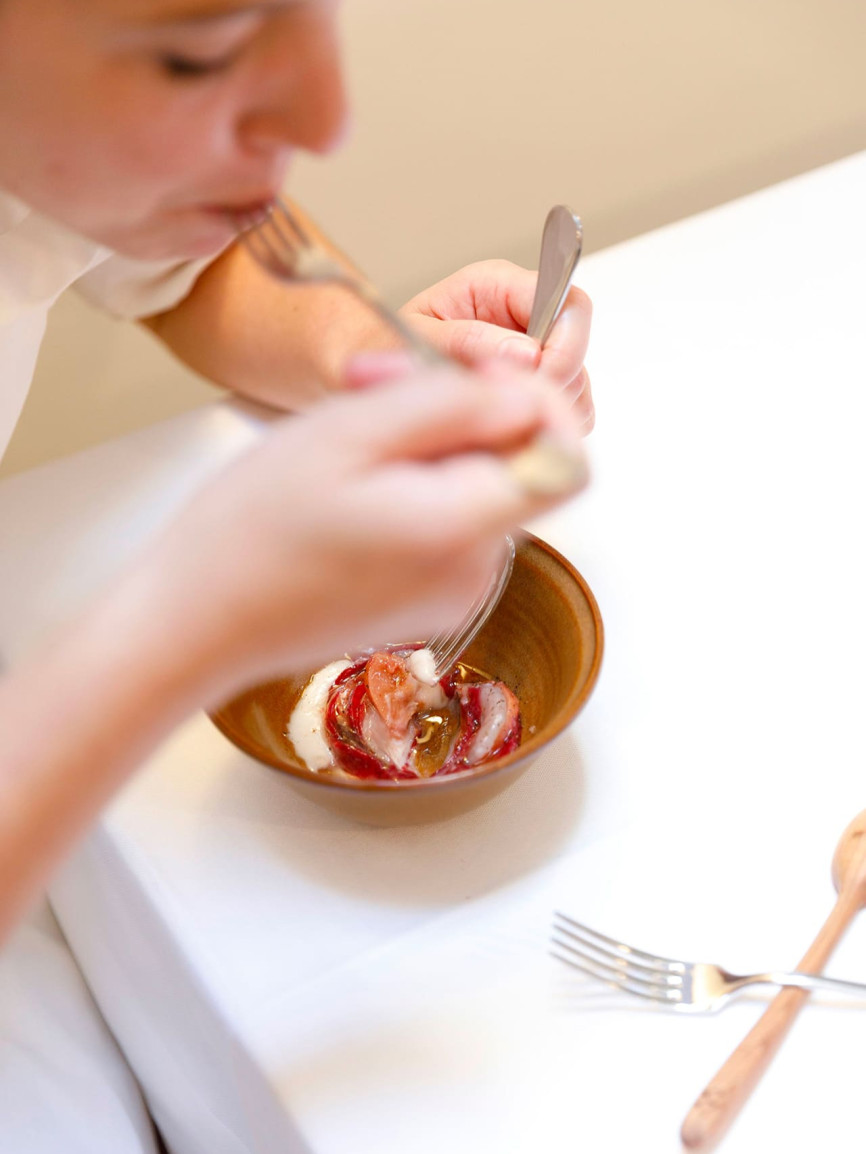
Manon Fleury has a mind as sharp as her kitchen knives. Mentored by two-star Michelin chef Dan Barber at the Blue Hill near New York, she was deeply influenced by his ‘farm-to-fork’ approach. After honing her craft at the Mermoz then the Perchoir, the young chef rapidly built her reputation, garnering her first Michelin star for Datil, which opened in 2023. At the restaurant, Fleury brings a laser-sharp focus to dishes where plants take centre stage, balanced by a strong commitment towards people. We sat down with her to discuss her approach - including her offbeat Champagne pairings.


You focus not only on cooking itself, but also on creativity and a strong commitment to work ethics. These interactions between thinking and doing come together in your book on cereals.
MANON FLEURY
Books allow you to set things down. In an age of social media, there is a tendency not to step back from what we do. Writing a book forces you to ask yourself: Where am I at? What is my narrative? What are the recipes I want to create? Documenting your work gets your creative juices flowing! In my book Cereals (Ed: published in 2022 by Flammarion), I examine the place of bread in French cuisine, particularly the central role it plays in our daily cereal intake. My aim was to explore how this could be diversified and put it into perspective at a time when gluten intolerance is widespread and 55% of wheat fields are devoted to ultra-processed wheat. I believe it is possible to diversify the French agricultural landscape – and that doing so would be a positive step towards self-sufficiency. When we talk about diversity in food and in plant-based foods, what alternatives can we turn to in order to rethink our daily relationship with cereals? I hope the book can serve as a tool for engaging with the public around the use of cereals and for showing how they can be elevated - ultimately moving away from the heavy, overly repetitive ways in which we are used to preparing them on a daily basis.

You are committed to cooking in a more transparent and conscientious way, and your team at Datil is almost entirely women. Does this challenge traditional restaurant conventions?
MANON FLEURY
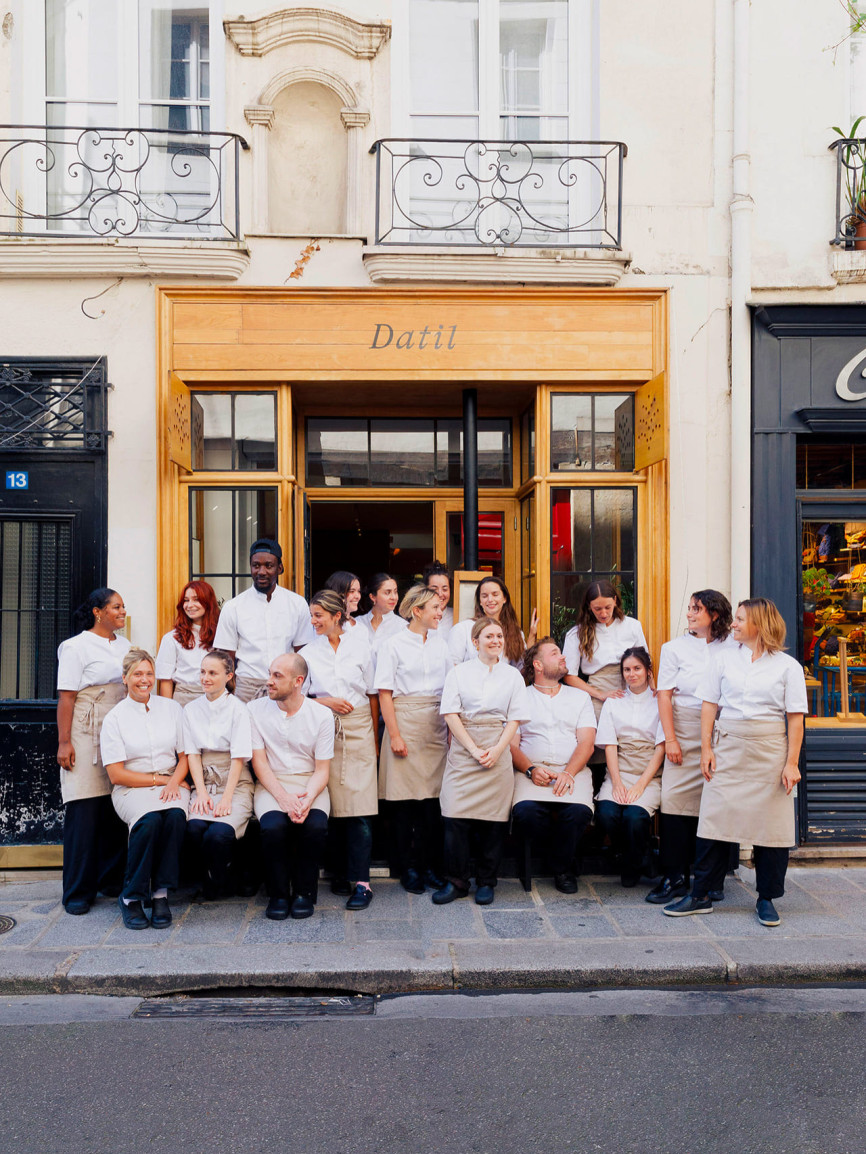
Sometimes, saying things that are slightly radical can push boundaries. At the same time, I’ve realised that change requires a measured approach – true revolution does not shake up conventions overnight. After creating a different system at Datil, I couldn’t now go back to a classic hierarchy, with a certain number of men in the kitchen dictating orders and disregarding my authority. I am fully aware that this is still unusual in French gastronomy. Since Datil opened two years ago, our team has been 80% women and I am extremely proud to work alongside them every day. And the system works beautifully!

So what you’re saying is that Datil is as much about people – you showcase all your producers on your website and in the restaurant – as it is about flavour?
MANON FLEURY
Absolutely. People are the cornerstone of this project – that matters more to me than simply saying it’s built on talented chefs in the kitchen. I feel there are still thousands of things for me to learn in this profession and yes, I want to draw on different experiences and backgrounds to broaden my perspective. There is so much to discover – techniques both new and traditional, places, people, ingredients – the list is endless. I don’t have time to get bored! In fact, we make a point of meeting all our producers, including our partner winegrowers, both men and women.

Wine is an integral part of your cuisine, almost like another ingredient?
MANON FLEURY
Totally – I love wine. I’m fascinated by it but haven’t yet had the time or opportunity to focus on it fully. I feel that once a restaurant is well-established, you have the energy to devote to wine. It’s a subject that truly interests me, especially through the stories of the winegrowers and above all, the pairing aspect – a great wine can elevate a dish and transport it to another place!

Our cuisine, which focuses on living ingredients and has a plant-based core, is particularly well-suited to Champagne.

Which led you to create the ‘Combattantes’ label with Mylène Bru, a winegrower in Sète.
MANON FLEURY
The entire team at Datil went to meet her to learn more about her vineyards and her work. That’s when she suggested creating a wine together! She gave us fresh Cinsault and Muscat de Hambourg juice to taste so we could blend them. We shared our impressions and essentially ‘rustled up’ a wine together! She used a wine thief, we blended and then tasted the wine again – much like we do with a jus in the kitchen. For a ‘kidnapping’ experience, it was great fun! Just like our cuisine, the wine was complex yet simple and generous. And, of course, we now serve it at the restaurant!

What can you say about the wines on the menu at Datil?
MANON FLEURY
I love Champagne. Our cuisine, which focuses on living ingredients, producers and has a plant-based core, is particularly well-suited to it – especially grower Champagnes. For instance, the Champagnes by Olivier Horiot from the village of Riceys are magnificent, especially his extraordinary Soléra label, a blend of seven Champagne grape varieties fermented as a ‘blanc de noir’ – it can elevate dishes like scallops or even a simple turnip confit. I could happily enjoy an entire meal with a bottle of Champagne, such as those by Elise Bougy, which I find incredibly aromatic. It really puts vegetables at the heart of the flavour experience – and I think that’s pretty cool.

Are there any other outliers that define your food and wine pairings?
MANON FLEURY
Our sommelier, Valentine Roustit, pairs the wines with dishes on the menu, though we often discuss everything together first. In the same spirit, skin-contact wines work particularly well with our cuisine. An example that comes to mind is wine by Patrick Meyer from Julien Meyer & Fils in Alsace. His Gewurztraminer, in particular, adds freshness and an aromatic introduction that is perfect for fresh starters. For even more striking freshness, I turn to Sicilian wines by Alessandro Viola. Despite coming from a hot climate, they are ethereal and effortless.
Article - Élodie Louchez
After being editor-in-chief for the NRJ radio group, then for society and cultural programmes for France 3, France 5 and Pink TV with Michel Field, Elodie Louchez is now a journalist and author for discovery magazines and society documentaries, with a particular focus on ecofeminism. She is a member of the natural wine producers’ organisation and five years ago, with her partner Marie Carroget, she founded the first exhibition for female natural winegrowers in Nantes – Canons.
Prolong the experience
Discover the profiles of creative and influential personalities explaining their relationship with wine, the secrets of sommeliers or legendary establishments.
When you subscribe to the magazine, your email address is only used to send you our content newsletter. You can unsubscribe at any time by clicking the unsubscribe link included in each newsletter. To find out more about management of your data and your rights, click here .